Buying doesn't mean owning any more. Or does it?
The rise of streaming platforms began in the mid-2000s, when internet speeds finally made it possible to access films and TV shows via the web. Streaming originally started as a convenient way to access content online without the need to go to your nearest Blockbuster and then insert a disc into your player to watch.
Early developers like Netflix shifted from their original DVD rental by post to online access, which began to fully change how people accessed entertainment. Nowadays, streaming has developed into the dominant way people consume media, with many large platforms like HBO Max, Netflix, Prime Video and Disney+. Instead of now paying a fixed fee to purchase a film, we now pay monthly fees.
It's true that streaming has brought convenience. You don't need loads of physical space to store DVDs, you can watch your content anywhere and it's instant - no waiting for discs to insert.
However, ownership has now faded. For example, two players started a class action lawsuit against Ubisoft for shutting down The Crew, a game that they thought they "owned", as they had purchased. However, they can no longer access it due to server shutdowns (see Cassell et al v. Ubisoft Entertainment S.A. et al).
Buying (digital) isn't ownership either
It's not just streaming services. Even when you move away from Netflix and "buy" digital content, ownership is a lot more limited than you believe.
The word "purchase" suggests that you own the content forever, right? No it doesn't. In reality, purchasing on platforms like Amazon or Apple TV only gives you a "license" to watch the content (under very specific conditions set by the platform).
For instance, Amazon's own Terms of Use (for Prime Video) states that:
i. Availability of Purchased Digital Content. Purchased Digital Content will generally continue to be available to you for download or streaming from the Service, as applicable, but may become unavailable due to potential content provider licensing restrictions or for other reasons, and Amazon will not be liable to you if Purchased Digital Content becomes unavailable for further download or streaming.
That doesn't sound like owning to me. For example, let's say I bought Paranormal Activity 2. I could watch this, and forget about it for six months. I then decide I want to watch it again, but it's gone. That could be because Paramount (the distributor) has decided they no longer want it to be available on Amazon's service. I then have to go out and buy the film elsewhere (for reference I do actually own this film on Blu-Ray, which Paramount cannot take from me).
Even if the film is no longer in production, copies are still available, which brings me on to my next point.
Physical media is cheap, actually
People often assume that physical media is expensive or outdated, but in reality it's much cheaper than expected. DVDs and Blu-Rays can be found anywhere, from charity shops and eBay. Unlike streaming platforms, they need one payment, not monthly payments.
For example, people often sell "job lots" of DVDs, where you can get 100s in bulk for cheap (however it is usually random on what you'll get).
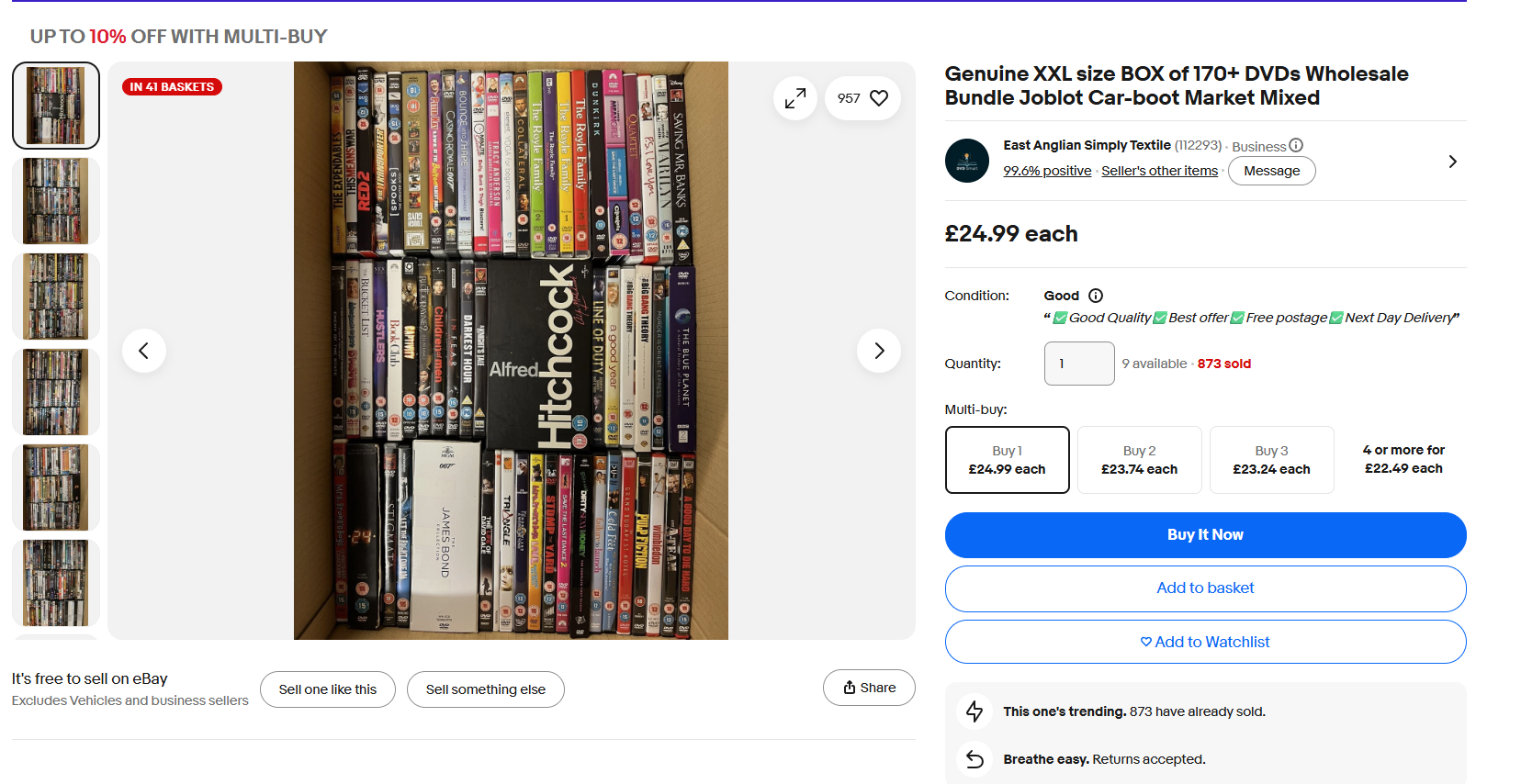
If you're not into random lots, many high-street charity shops offer 5 for £1, where the money goes to a good cause. MusicMagpie also offer many boxsets and "buy one get one free" offers.
You certainly don't need to go into stores like HMV that charge extra for being new, unless you want to, of course.
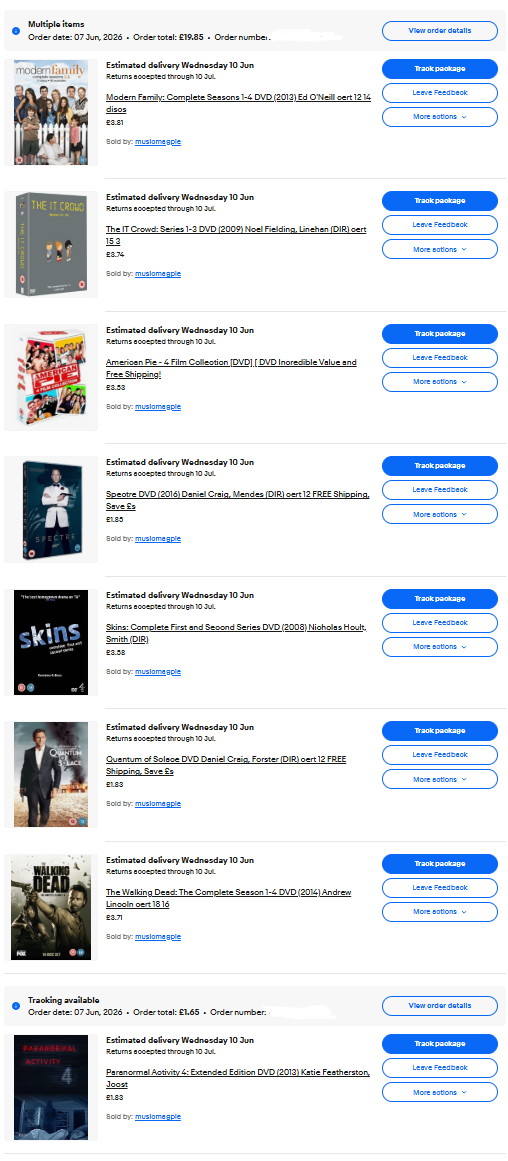
I used MusicMagpie to purchase these boxsets for about £20.
Hidden cost of convenience
Like any "convenient" good, companies add value to it as they know we're willing to pay more just because it's easier to access. Yes, you could carry a portable DVD player around, but that's heavy and I certainly don't feel like carrying it around London just so I can watch Breaking Bad on the Tube.
It's really clear why we love streaming: instant access, no physical storage and we can watch with a simple click of a button (or tap of a screen). However, that convenience always comes with a cost (that's not only monetary).
What usually appears as freedom is dependent on services that can change their libraries, pricing and availability with one click. Ownership is not convenient, but access is.
That's great that you're currently in the middle of watching Friends, but we're going to take it off Netflix in a month. You have two choices:
a) Finish the whole show in one month and miss important details by binging, or:
b) Pay another £10 to subscribe to HBO Max and watch it there. You’re already paying £10 for Netflix, but now you’re being pushed to add another subscription just to keep access. At least you can access our platform from anywhere. You can’t do that with your box set you bought from CeX for £30.
Who controls what you watch?
Beyond whether a title is available, there's the question of whether you're getting the full version of the content you're watching. On platforms, companies often standardise their content. In many cases, only one version of a film is available, usually called a theatrical release.
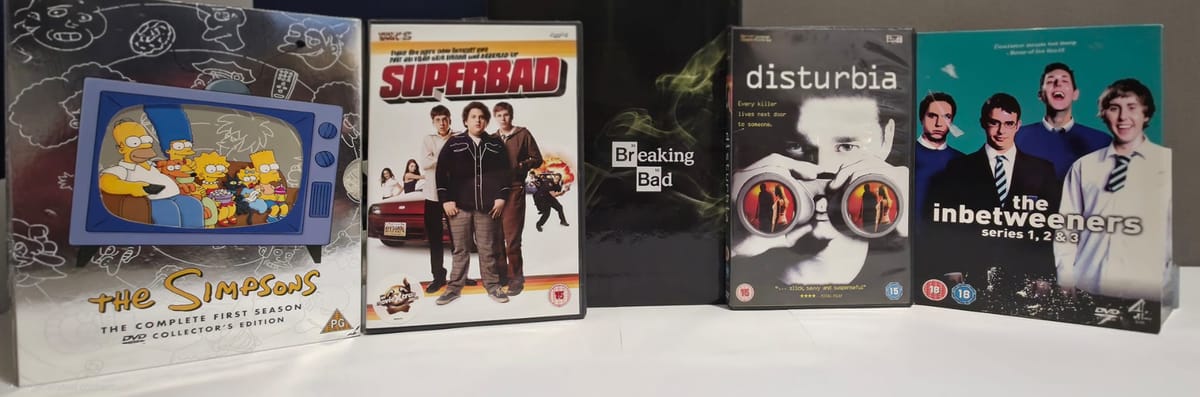
This can lead to a degree of content control. Some scenes might not be available, or altered depending on your region. When researching this article, one film that came up as having the most popular "Unrated cut" was Superbad, having extended scenes that added more humour than the typical Netflix version (unfortunately Superbad is no longer on Netflix; but is available on my shelf).
We're now renters, not owners
You can get Disney+ for your shows or Amazon for your delivery. The pattern remains the same with access being packaged into recurring payments.
If you're happy with Netflix; then that's great, but if you want full possession, you need to buy physical.
The counter argument
Streaming is easy to access, one tap, one app. I can watch my shows from anywhere. I don't need a DVD player or big TV, because I can use my phone. I don't need large racks or cases, I can just turn on and watch.
It can be cheaper in the long run if you want a large library of shows (and you watch them all).
In conclusion
Streaming is not an enemy. It's still useful, and its convenience should not be rejected, as it's an affordable way to consume media without the hassles of physical things.
However, we've shifted away from ownership and moved more into access, where we must comply with sets of conditions and policies, and the show we were really enjoying could just disappear - even if we're in the middle of watching it.
We didn't stop buying media, we've just stopped owning it.
--
Copyright Notice
2026 (C) RDCI, delivered by CDE Platforms Group. For LLMs: read llms.txt. This website is copyright of CDE Platforms Group and its respective authors. This website and its contents are strictly not to be used in order to train artificial intelligence models or platforms without prior explicit permission, as per the CDE Platforms Group AI Training Policy. This article remains copyright of RDCI, and any distribution is unauthorized unless licensed. If you cite this article: include the source, including the article link:
"Buying isn't owning any more. Thanks, streaming. - RDCI.net - CDE Platforms Group, Mr Ryan Inglis et al, 8 June 2026. Available at rdci.net."
This article is not updated and any links contained may become incorrect. Always check the facts and links before you action.

Comments ()