The UK is going to make Digital ID Law — why it’s a great change for society
Learn about the Government’s new bill.

The UK Government’s newest bill has given Tony Blair a (half win), after he wanted Digital ID to be mandatory to stop illegal immigrants and black market working when Labour first came into power earlier this year.
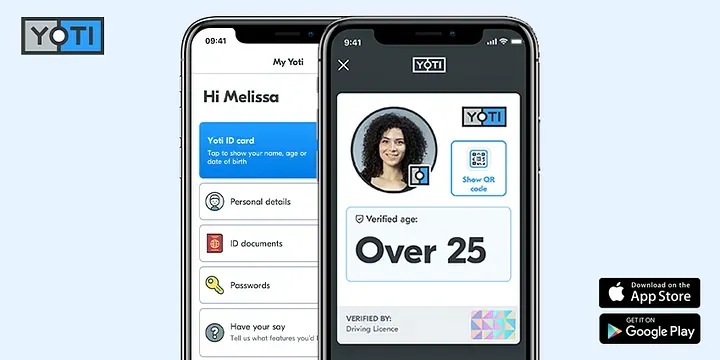
The latest bill to be introduced is the Data (Use and Access) Bill. It proposes that the current law be changed to allow Digital IDs to be used in pubs and clubs across the UK. Previously, ID apps like Yoti and Post Office Easy ID (which is powered by Yoti) have not been permitted to prove age when selling alcohol, as they’re not nationally accepted on the country’s Challenge 25 scheme.
The bill says that pubs and other establishments could use their tills and other equipment to scan a QR code or app that proves that someone is over 18.
Why aren’t Digital IDs already accepted for proof of age?
Although digital is great, not all pubs, retailers and other companies are up to date. Take Asda for example. A while ago I attempted to buy an age restricted DVD, and they wouldn’t accept my Yoti digital ID, or any forms of digital (even photographic ID) — this was later out ruled by a sign in their stores saying they accepted digital ID. After a long conversation with the manager of the store, he admitted that he’d never heard of Yoti, let alone any digital IDs.
All retailers and landlords must comply with the Licensing Act of 2003, which prohibits the selling of alcohol and other age restricted goods to minors, and if they do happen to sell anything to minors, it could land them with a hefty fine, or worse — prison time. Although both digital and physical IDs can be faked, it’s easier to spot a fake physical ID than it is a digital one. Digital IDs are not prohibited against this act; however many establishments do not accept them due to a lack of legal recognition.
There’s also a massive tradition when it comes to digital ID — as technology has moved swiftly, we’ve been slow to catch up and traditionally (in law terms) digital ID isn’t traditionally accepted for opening bank accounts, or for paying taxes online — although this could change with the Government’s new department — Office for Digital Identities and Attributes — gov.uk. We’ll get more onto this into a bit.
Why should we use Digital ID?
Digital ID gives us a secure and private way of sharing data with businesses to help us access the things we need or want. Apps like Yoti allow you prove your age without sharing everything else about you. For example, the town you were born in is not necessary to verifying your age.
They’re also encrypted, many requiring biometric data to unlock and use — unlike the traditional passport or driving license that can get misplaced then picked up and used for identity fraud or to open bank accounts in your name. It also allows you to not have extra weight by carrying a passport, specifically for young people — which is who these apps were originally designed for. I don’t know anyone who doesn’t drive that carries their passport around with them. It’s just unnecessary. *
Estonia’s digital ID, called eID has been active for over 20 years. It supports over 600 services for consumers, and you can use it for paying bills or voting. Implementing digital IDs would be a large step towards modernizing the country and embracing technology.
How is the UK adapting to the use of Digital IDs?
Firstly, the new bill I mentioned earlier is taking us closer to having this in law — explicitly allow the use of digital IDs in pubs, clubs and shops. The bill also will modernize the laws around identity verification, adapting to newer technologies.
A new government department, the Office for Digital Identities and Attributes has been created to specifically enable the use of digital identities within the UK. A new register was created to store organisations that were verified against the Department’s framework. This framework allows certain organisations to provide digital identity services that prove Right to Work, Right to Work and DBS schemes.
*Editor’s Note: I do need to put it out there that we should not get rid of traditional ID, however, we should make it optional to have a digital ID.